
A new study in Frontiers in Education [ 1 ] did something most gamification research has not: it put gender front and center. Instead of treating it as a background variable, researchers ran a moderation analysis and found that gender actively changes how gamification affects student motivation. The same points, badges, and competitive mechanics produce statistically different motivational outcomes for boys and girls.
This is not a small footnote. It is a fundamental challenge to the way most of us educator have been using gamification in the classroom. I am very much guilty of it too!
And this research does not exist in a vacuum. Over in France, a national ludopedagogy forum [ 2 ] brought together educators to formalize game-based teaching practices. A sign that gamification is moving from "fun experiment" to "institutional strategy." Meanwhile, STEM identity research by Lv, Wang, and Peng [ 3 ] shows that motivation is not an internal switch you flip. It is shaped by relationships, social support, and the signals students receive about who belongs in STEM. Add those findings together, and the picture is clear: the actual game matters less than how each learner experiences it.
Here is the tension to ponder upon. Competition-driven gamification (i.e. leaderboards, speed races, point rankings) tends to light up students who already see themselves as "winners" in that context. For others, it reinforces the opposite message: this is not for me.
The question is not whether gamification works. It does. The question is: for whom?
School principal and education leadership writer Eric Sheninger argues that slapping badges on a lesson is exactly the kind of "quick fix" that fails to create real, lasting engagement. Sustainable change, he writes, "requires a system, not merely a collection of isolated initiatives." [ 4 ] In other words, true gamification is not a layer you add on top. It is a rethinking of how the challenge itself is designed.
And that raises for us at Body.Scratch, and for pedagogy workers in general, the real design dilemma: do you create separate gamified tracks for different students? That risks reinforcing stereotypes. Do you ignore the research and keep the same approach for everyone? That risks leaving learners behind. The answer might be simpler, and more physical, than either option.
This is where Body.Scratch steps into the conversation, literally.
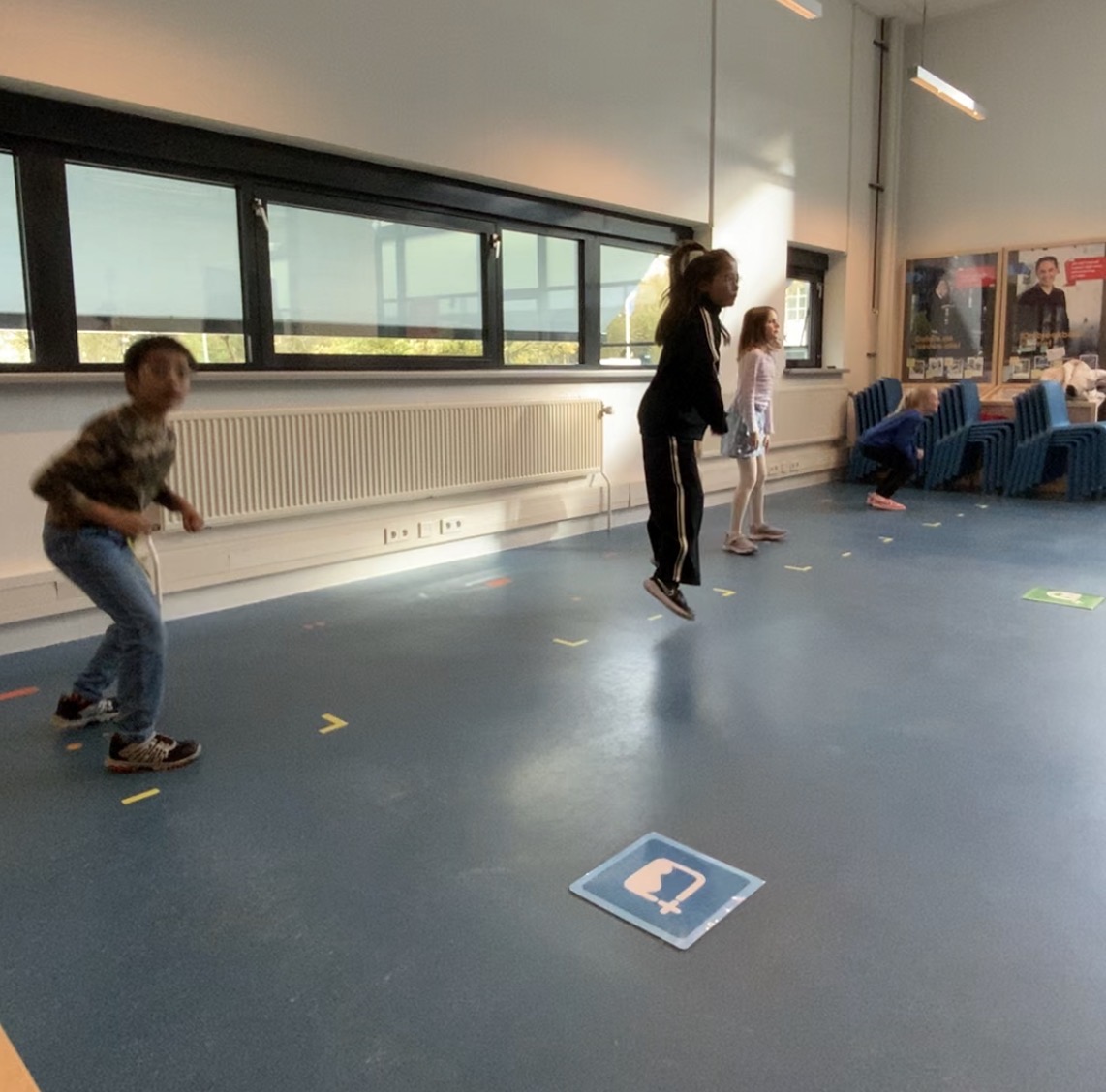
Think about what happens when you swap a leaderboard for a movement-based challenge. Instead of racing to rack up points on a screen, your students are stepping through algorithms, choreographing loops with their bodies, debugging code by physically moving through a sequence. The "game" is no longer about who scores highest. It is about finding your flow together.
Body.Scratch challenges are inherently gamified but through movement and collaboration, not competition. When every body is part of the code, through our shared challenges, the playing field levels out. Students who disengage from score-chasing mechanics find a different entry point. Students who thrive on energy and action get to channel it. The research suggests that embodied, collaborative game mechanics engage more diverse learners than solely screen-based, ranking-driven ones. That is not theory. We increasingly see this reality, and that is what teachers see when they drop some moves into a coding lesson!
🙌 Try this next: Before your next gamified lesson, take a minute to audit the game you are running. Ask yourself: is this challenge competition-driven (points, rankings, speed) or exploration-driven (discovery, collaboration, movement)? If it leans competitive, try shifting just one activity. Have students physically step through an algorithm instead of racing through it on a screen. Let them choreograph a loop (guesscratch challenge type) instead of solving one for points. One shift. See who lights up differently.