Dutch schools got a wake-up call. SIVON launched a formal AI assessment framework this week, giving schools a structured way to evaluate AI tools before letting them into classrooms. Meanwhile, school network Unicoz released guidelines that leave room for each school to shape its own AI policy — no one-size-fits-all approach.
This is a big deal. The Netherlands is one of the first countries building sector-wide AI governance for K-12. Other European nations are watching.
New research shows AI coding tools are reaching younger learners faster than expected. A study on ChatGPT-assisted programming found measurable effects on primary students' coding performance. But here is the catch: a parallel study warns that AI can become a "crutch" — offloading cognitive effort rather than scaffolding it [ 1 ].
The question is no longer whether AI belongs in your classroom. It is whether your students are learning to think — or just learning to prompt.
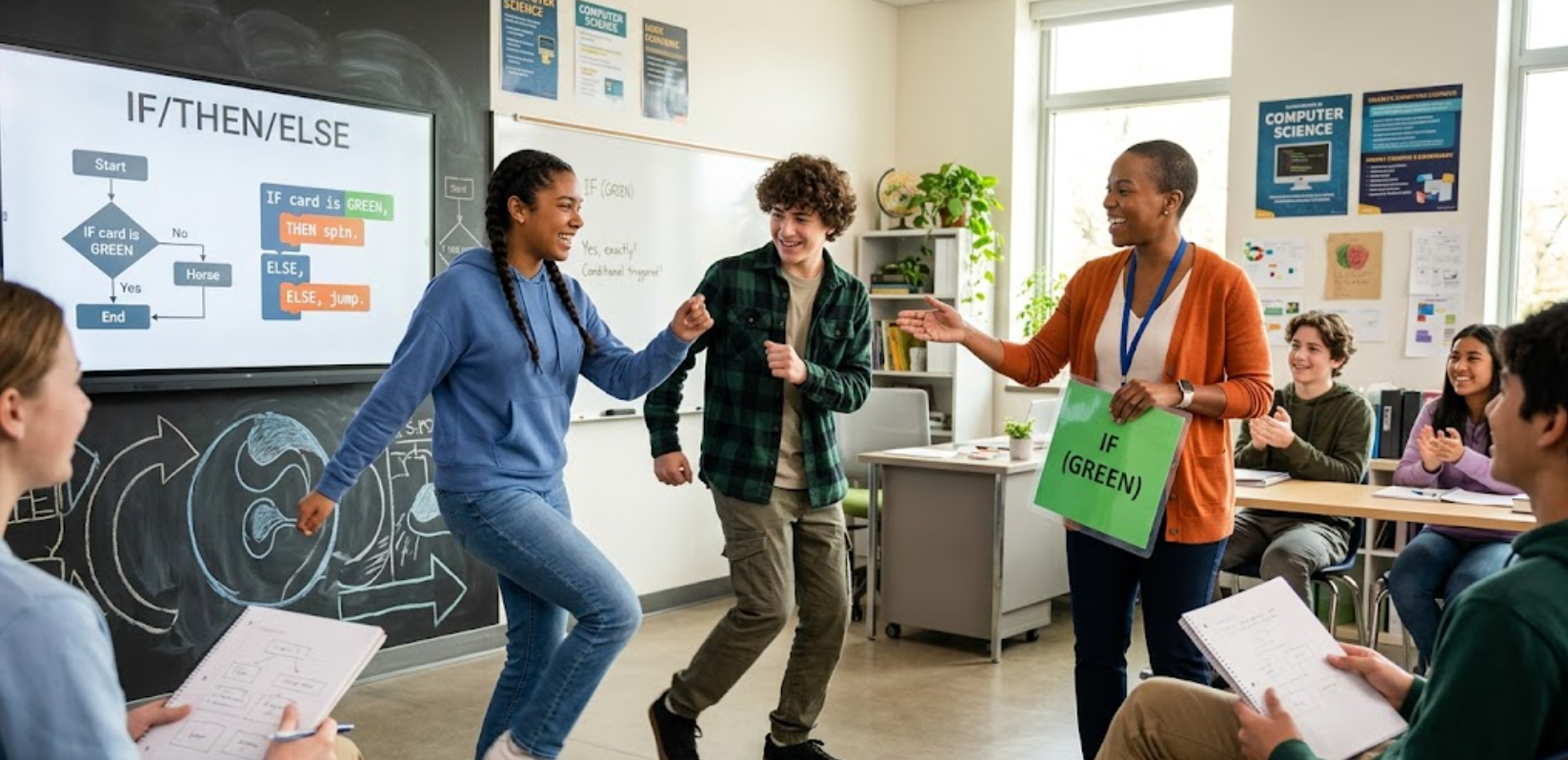
🙌 Try this next: Before students open any screen, run a Body.Scratch challenge teaching the same concept. Loops? Jump on every repetition. Conditionals? Stomp left or right. Let them 'sense' the logic first. Then, when they do use digital tools, they will know enough to spot when the AI gets it wrong. That is real computational thinking.
A deep-dive into handwriting research surfaced ten connections between motor activity and learning — from better spelling and reading comprehension to stronger concentration and memory. Separately, the musical quest "Hotel Zweefkees" showed how embodied performance builds courage and trust as learning tools.
🙌 Look at your classroom through an equity lens. Which students light up during movement but disengage at screens? A Body.Scratch challenge can be the on-ramp for learners left out of traditional coding. Drop some moves, level up together — every body can code.